By Tricia Chan, Girls Program Director
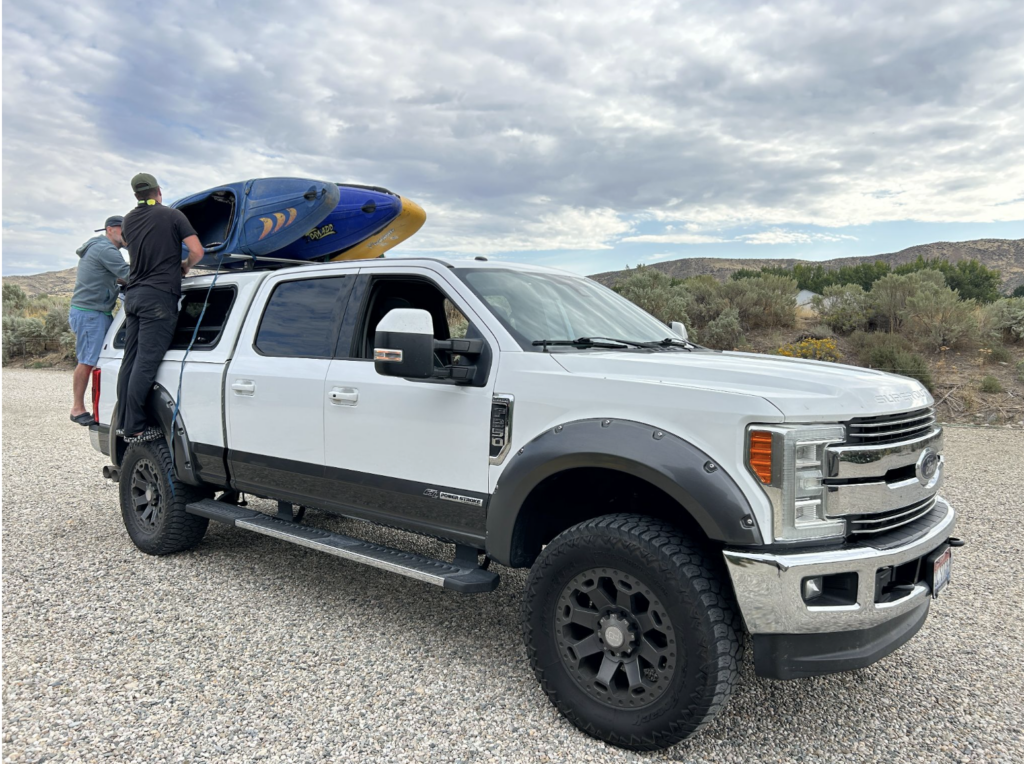
I toss the last of the 95 drybags into our giant rented truck and slam the tailgate before everything spills out. It’s September 12, and my crew- four friends, including my husband John- and I are leaving Boise, Idaho on our way to Boundary Creek Campground, the put-in for the Middle Fork of the Salmon River.
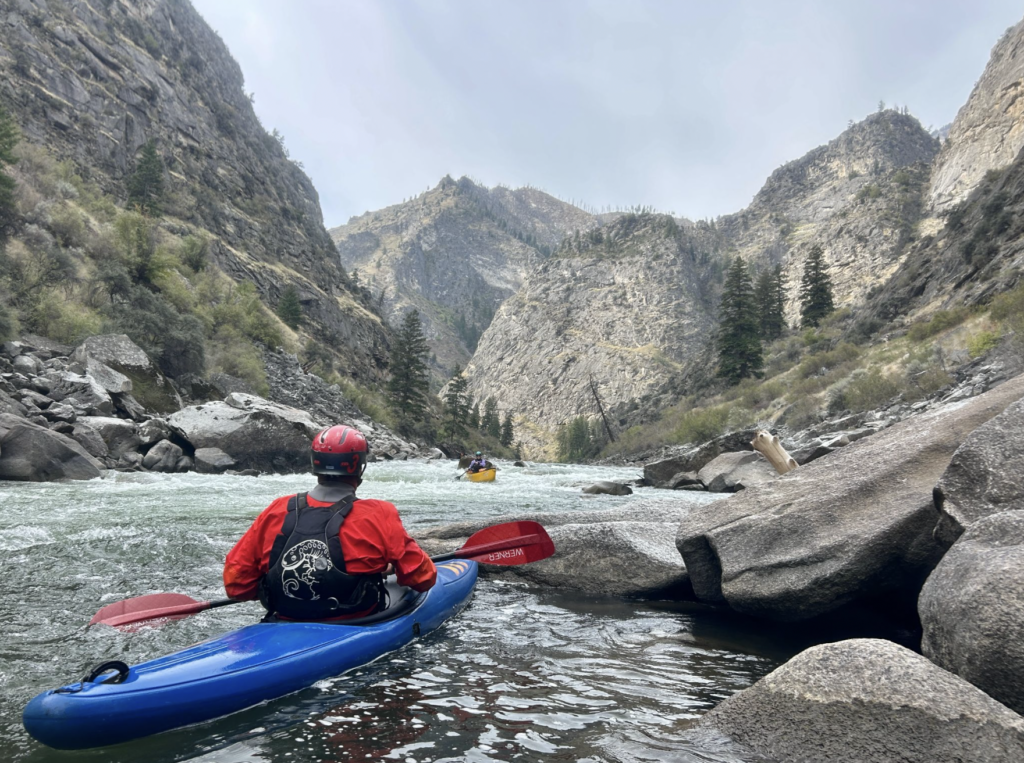
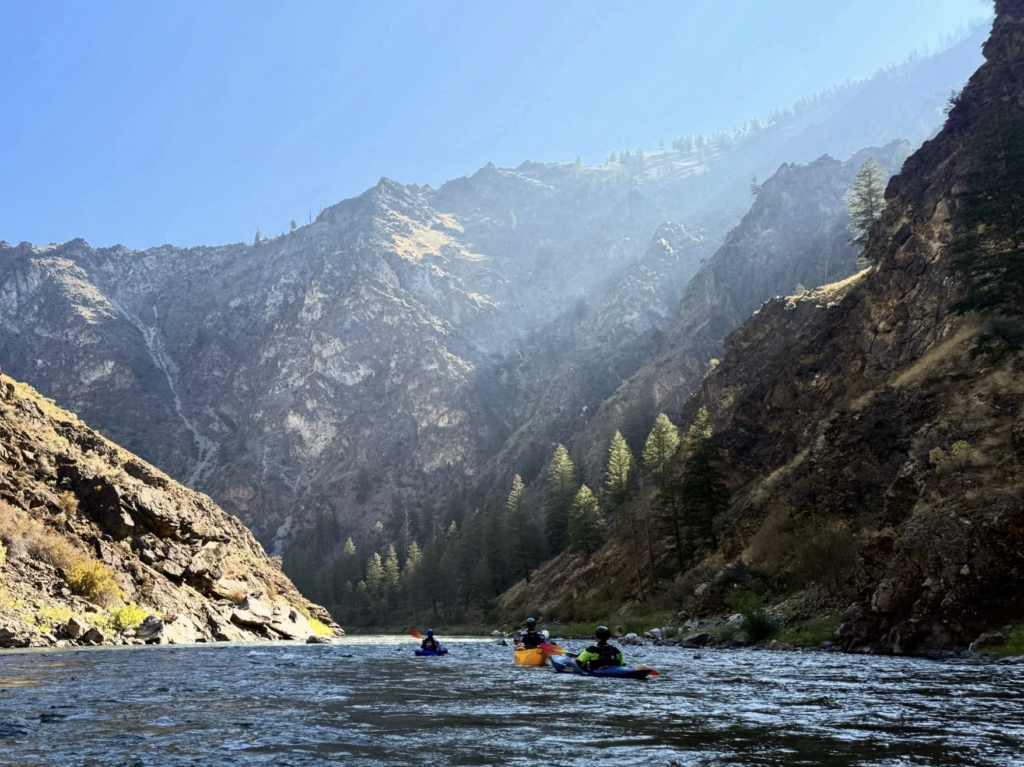
The Middle Fork of the Salmon is one of the premier multi-day whitewater expeditions in the United States. Flowing through Idaho’s Frank Church River of No Return Wilderness, the Middle Fork section is 100 miles of wild, remote, and exciting whitewater. Along the way are beautiful campsites, steaming hot springs, incredible wildlife, and scenery that feels almost impossibly vast.
There are over 100 named rapids on this stretch of river, and the Frank Church Wilderness is the largest roadless wilderness area in the lower 48 states. The river was also one of the original eight designated as part of the Wild and Scenic Rivers system in 1968. All that to say… this place is special. Unfortunately, getting to paddle it is not easy.
Did You Get A Permit?
Each year 20,000 hopeful boaters enter the Recreation.gov lottery for a chance at one of about 350 launch permits to float the legendary river section. That’s only a 1–2% success rate, making it one of the most coveted wilderness river trips in North America. Every February I hear the same chatter among friends: “Did you get a permit?” The answer is almost always no. Everyone wants one. Only a lucky few get them.
Partially this is because of snowpack and cold temperatures- the permit season only runs from late May through early September. If you’re willing to deal with the unpredictability of conditions outside that window. Early season snow and high water, or late season low flows and cold nights… you might be able to snag a pre- or post-season permit. Still competitive, but slightly more possible. That’s how I’ve been lucky enough to get on this river three times in the last ten years- and every single time, it’s been the best river experience I’ve had yet.
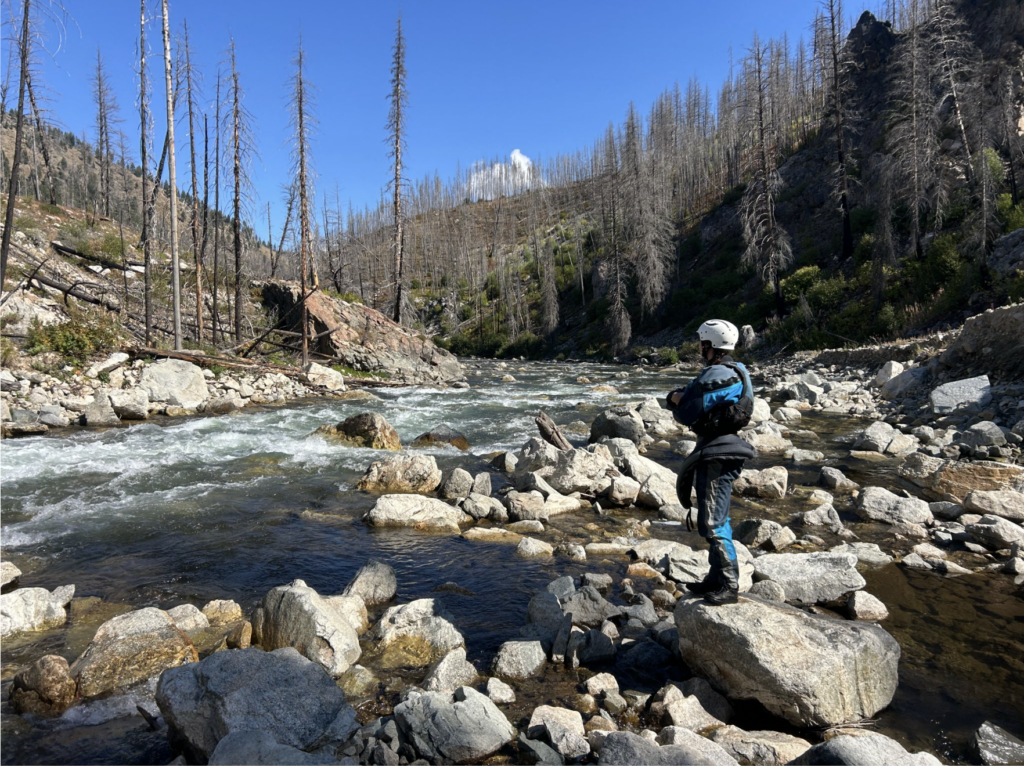
Hence the nine-hour drive from the nearest airport, town, and real amenities just to reach the put-in. As we drive north, the roads narrow and the towns get smaller. Eventually the pavement disappears entirely. We wind through towering Ponderosa pine forests, follow the frothy Payette River upstream, and pass through fire-scarred hillsides slowly regenerating with new green growth.
Pre-Launch Outfitting
When we finally reach Boundary Creek Campground, the place is empty. It’s off-season. We hike down to the river to collect water from a side creek and add purification treatment- something we’ll do every day for the next eight days. On many multi-day rivers in the U.S., water quality is poor enough that the only drinking water available is what you bring with you in giant containers. Here, clear mountain streams flow straight into the river.
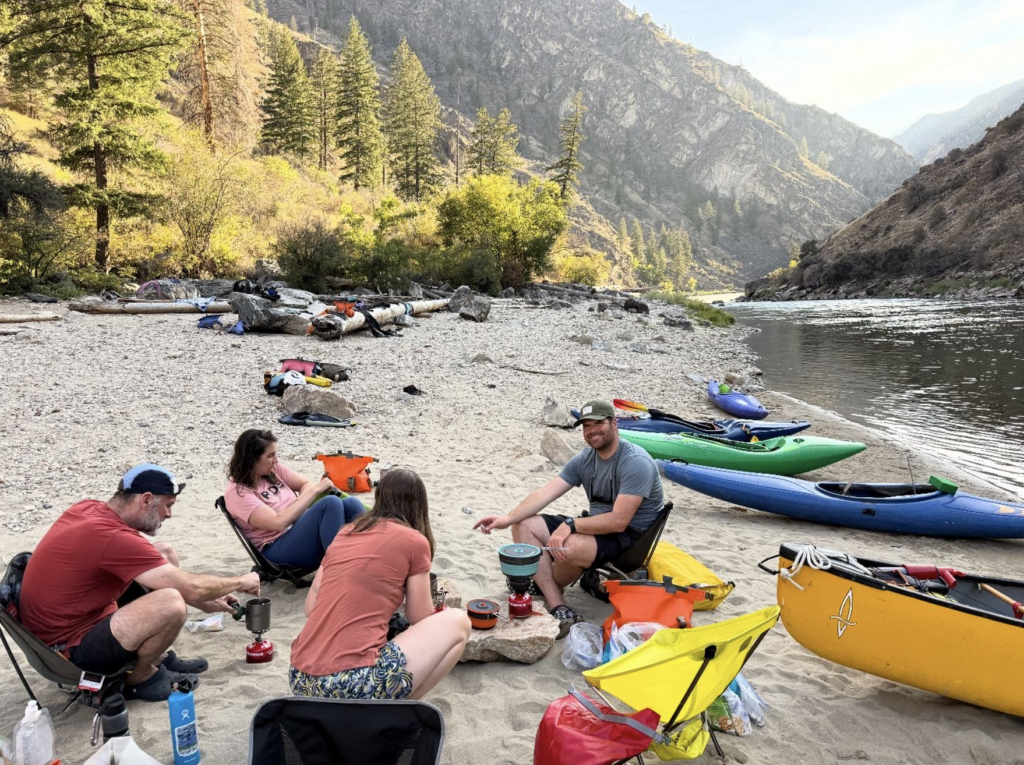
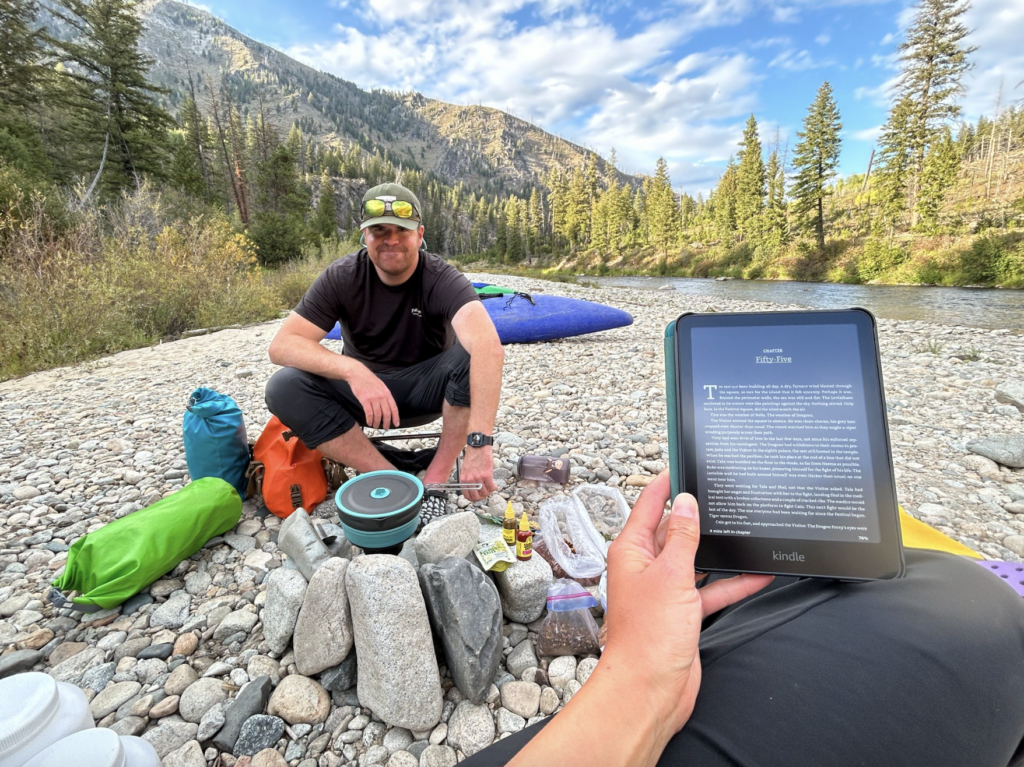
We open the tailgate and scramble to catch tumbling drybags as they spill out of the truck bed. Time to set up camp, fire up the stoves, and start dinner. It feels a little strange to be eating dehydrated meals next to our giant truck at a front-country campground. But soon we’ll trade this convenience for something much better: total remoteness. Over the years, as both outdoor professionals and enthusiastic recreationalists, we’ve developed food systems that are calorie-dense, packable, and thankfully, delicious. Tonight’s menu: red lentil soup with bacon, lemon, and parmesan. I have no complaints.
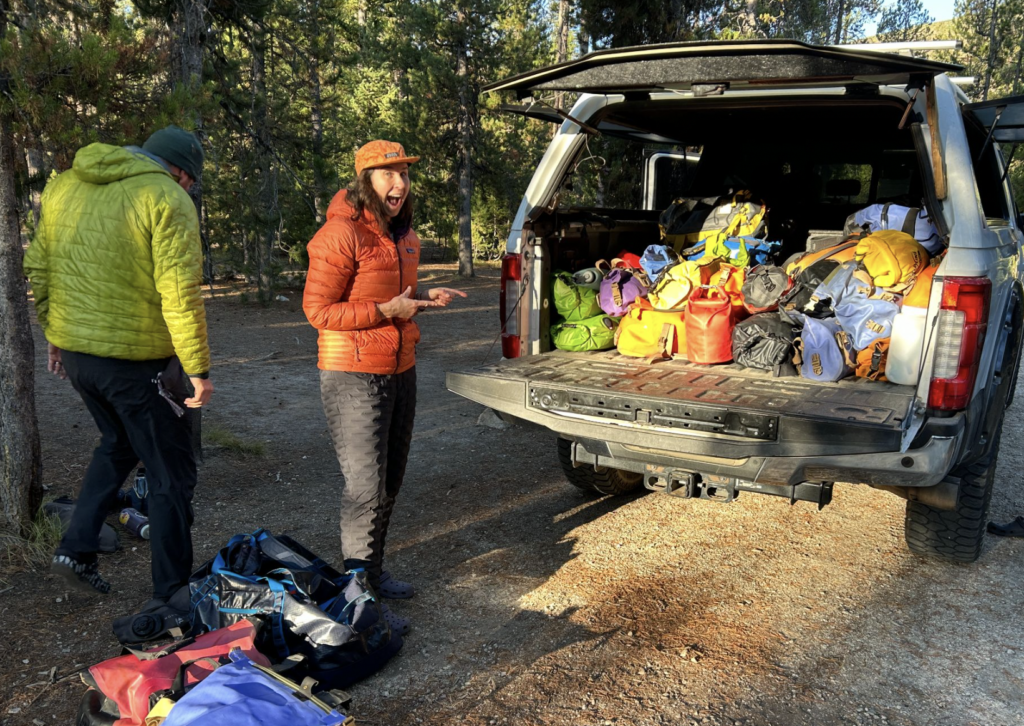
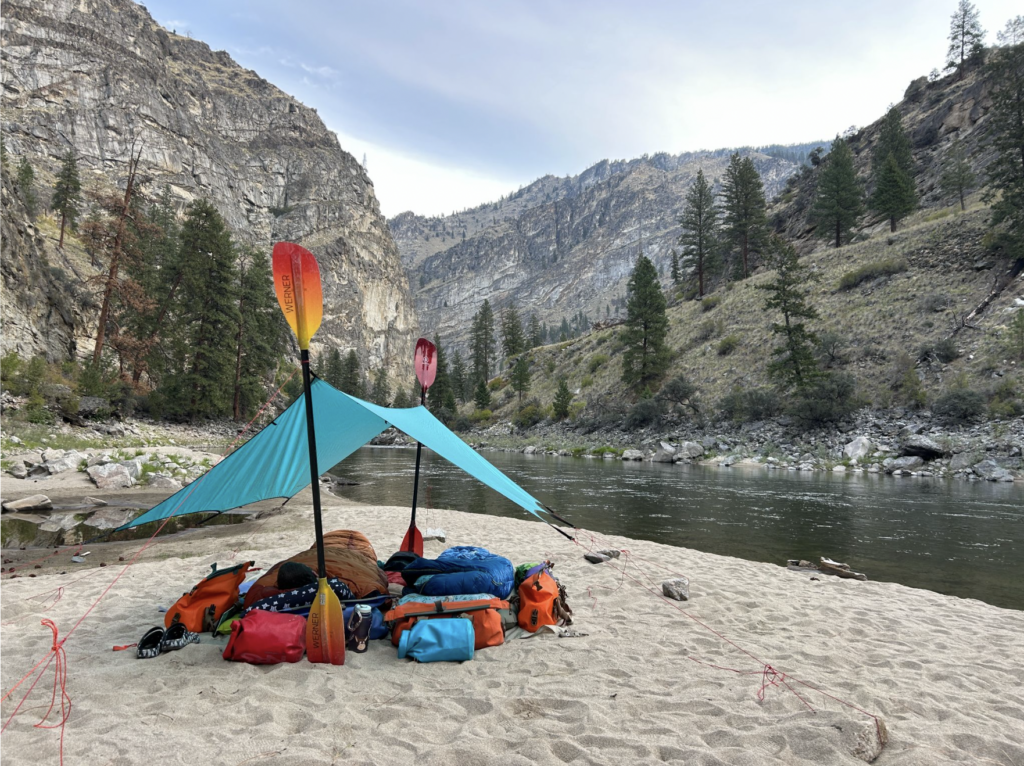
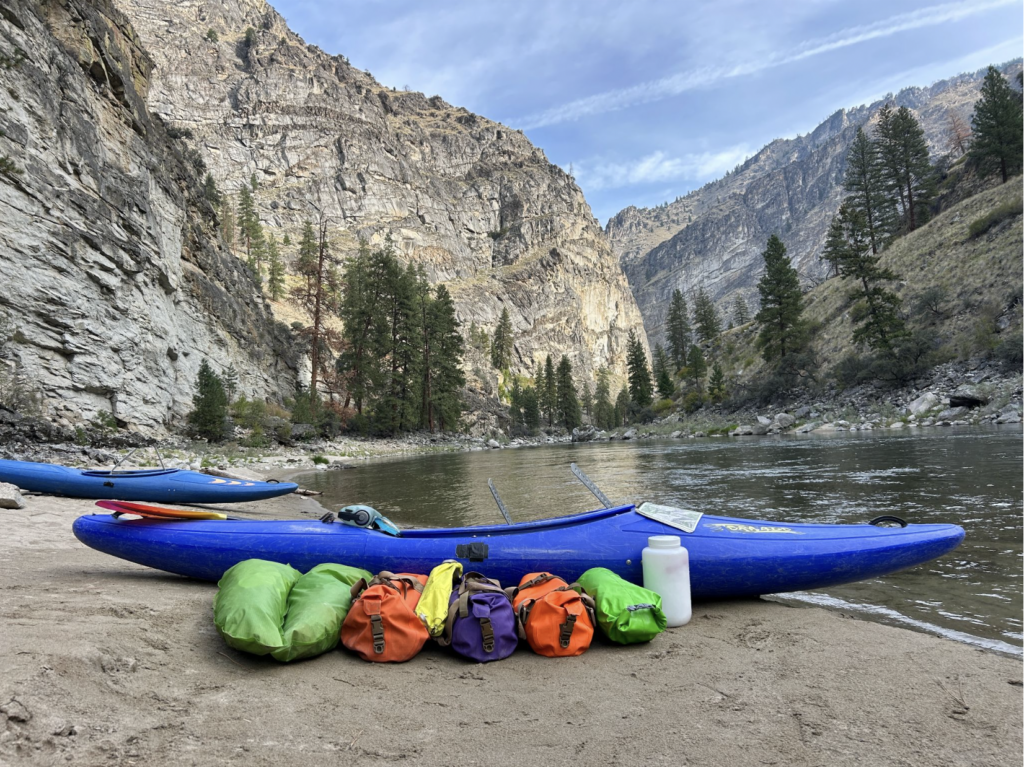
We’re running this trip self-support, meaning everything we need for the full eight days is packed into our kayaks. Each person carries their own stove, food, shelter, and gear.
On the Salmon
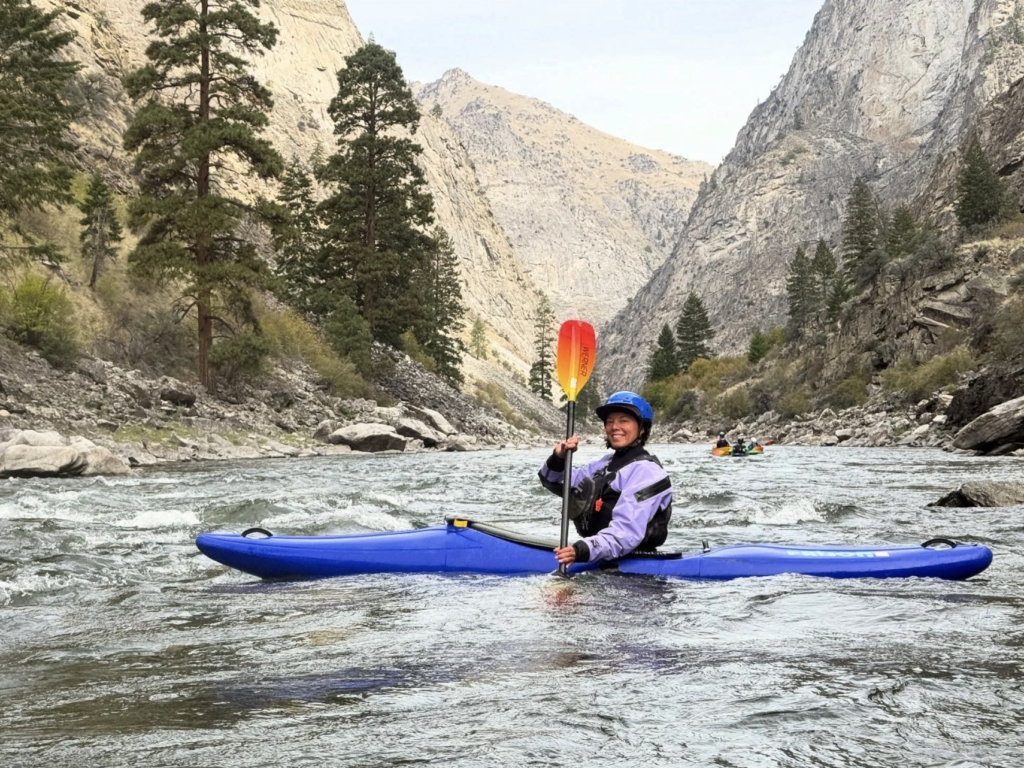
Paddling a loaded boat has always been more challenging for me. By the end of the day my lower back definitely feels the extra work of maneuvering a kayak packed full of gear. But there’s something really satisfying about the independence of it- self-support kayaking means we can move quickly, explore small side channels, and access camps that larger raft groups can’t reach. It also means that even though the water is low, it still feels perfect for kayaks! Throughout the week we pass several raft groups painfully stuck on rocks, pushing and dragging boats through shallow channels.
Spoiler alert: the trend continues and this trip ends up being the best multi-day river trip I’ve ever been on. And that’s saying something: over the last two decades, John and I have taken kayaks (and occasionally rafts) through more than 1,200 miles of multi-day whitewater. On the Salmon River alone we’ve paddled roughly 300 miles across the Middle Fork, Main Salmon, and Lower Salmon sections.
Every river trip is magical in its own way, but there is something indescribably special about the Middle Fork. Maybe it’s the combination of an incredible crew that works seamlessly together. Maybe it’s the quiet of fall, when most of the commercial traffic has ended. Maybe it’s the feeling of being one of the only groups on a 100-mile wilderness river. Plus, the hot springs.
Honestly, it might mostly be about the hot springs.
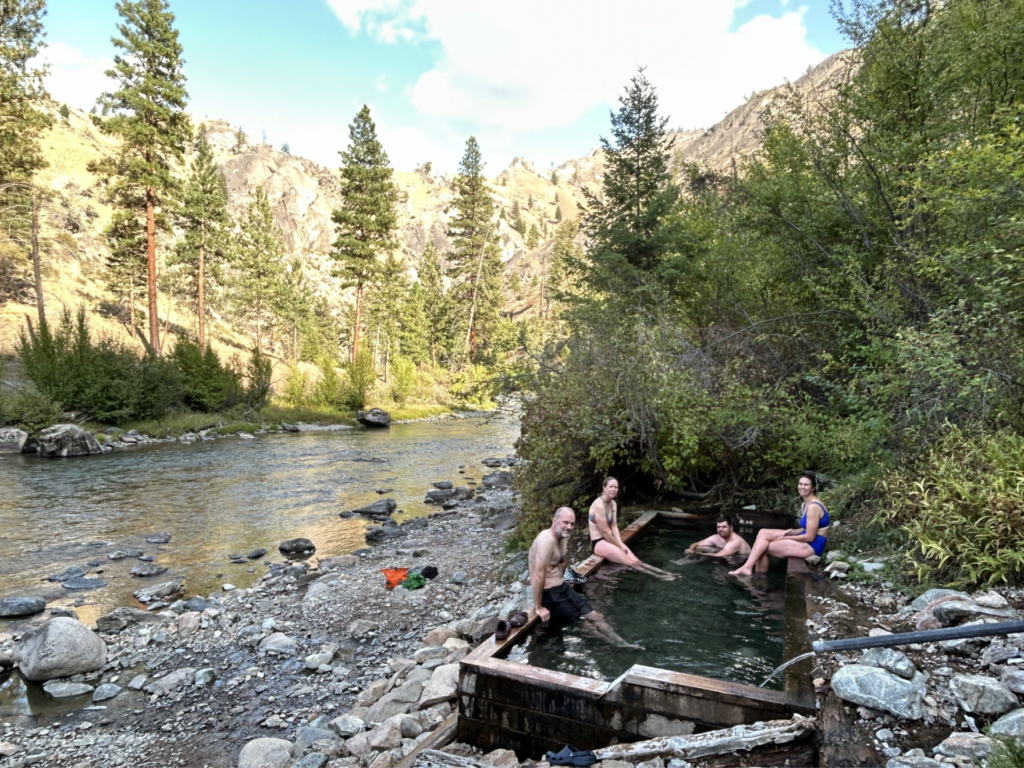
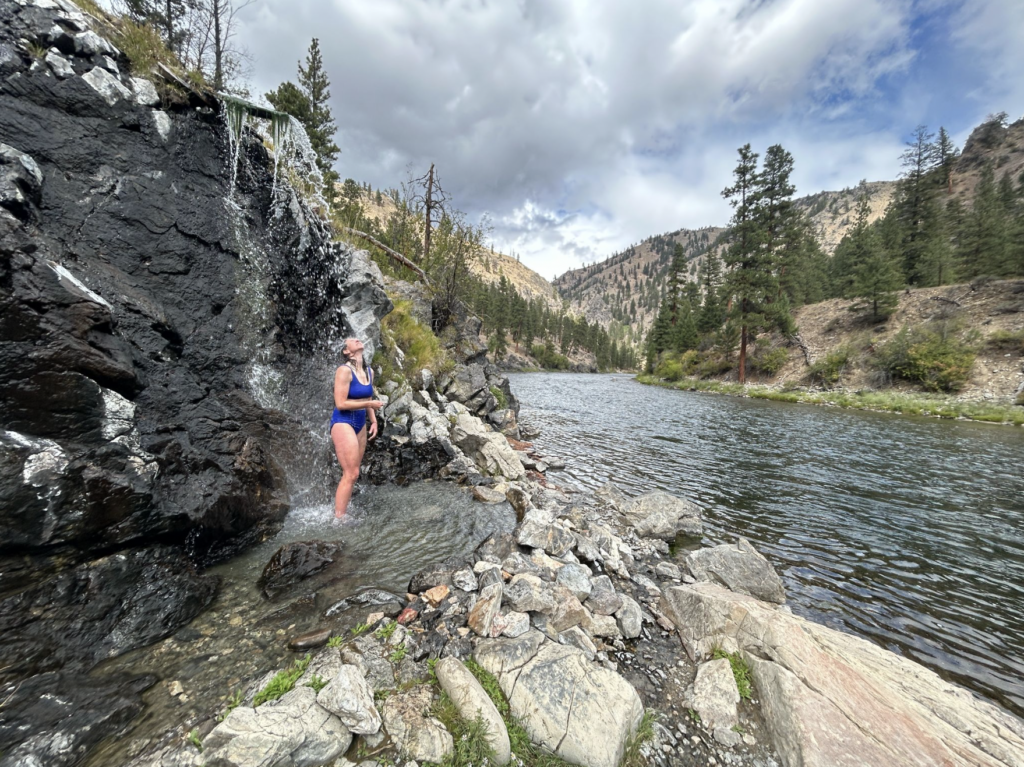
The Middle Fork flows through one of the most geologically complex wilderness areas in the western United States. The canyon walls tell a story that spans more than a billion years. Over its course, the river drops nearly 3,000 feet across 100 miles, creating the gradient that produces its near-constant whitewater. At its deepest point- known as Impassable Canyon- the gorge plunges 5,000 feet from rim to river, making it one of the deepest river canyons in North America. The river is famous for its hot springs that are due to the unique geological formation of the area. The rock formations that shape this landscape, part of the Idaho Batholith, are riddled with fractures and faults. These cracks act like a giant underground plumbing system, allowing groundwater to circulate deep into the Earth where it heats up before rising back to the surface. Because the canyon cuts so deeply into the landscape, it intersects many of these geothermal systems right at river level.
For boaters, that means something pretty amazing: you can pull over mid-day for a lunch soak, or, if you’re lucky, camp right next to one. Thanks to our late-season permit and the quiet river traffic, we managed to snag campsites next to four of the most popular hot springs along the river.
The Middle Fork is known for its continuous whitewater. Flatwater is rare, and most of the time you’re actively reading the river, choosing lines, and anticipating the next rapid. I feel so grateful that my partner and much of my community have spent years working in outdoor programming and risk management. Everyone comes to the river with a high baseline of skills: technical ability, good judgment, and the emotional steadiness that comes with lots of experience.
The Daily Rhythms of a River Trip
Each evening we spread out maps and talk through the next day: which rapids we might scout, where we might stop for lunch, what camps we’re hoping to reach. On the river, communication is simple and efficient- a small hand signal from someone at the front of the group is quickly recognized by someone in the back. If a rapid looks trickier than expected, someone is already hopping into an eddy to set safety. It’s the kind of quiet, practiced teamwork that makes everything smoother and more fun.
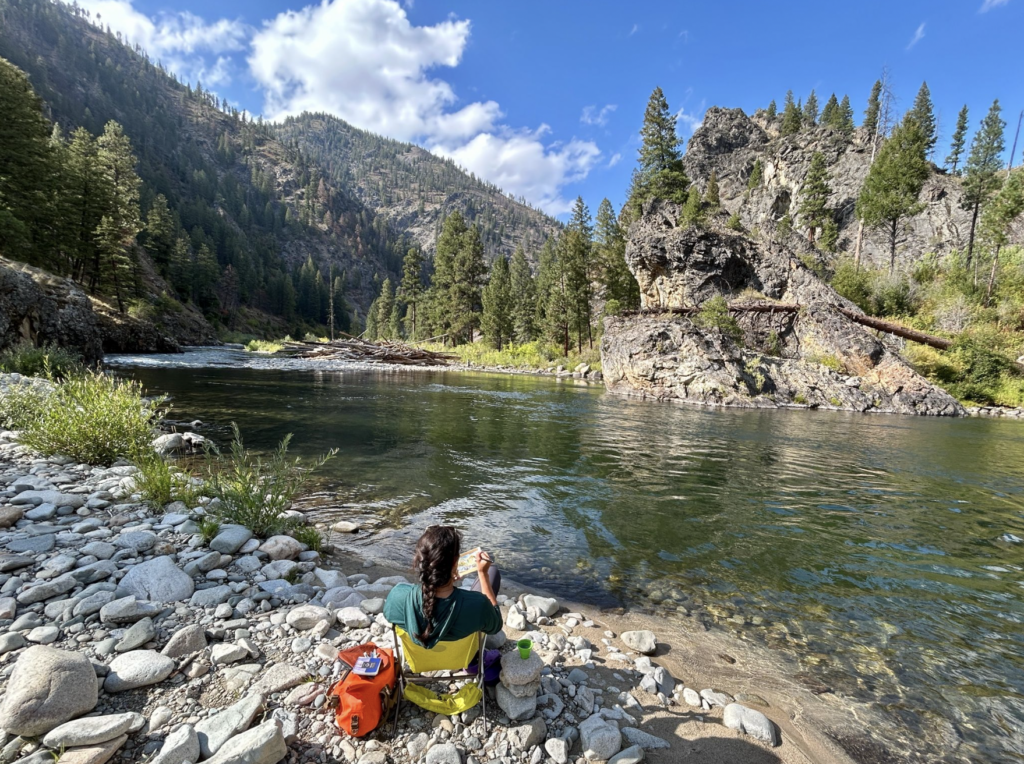
The benefit of being seasoned river travelers is that we don’t have to stress about our systems. Once camp is set and boats are unloaded, we get to focus on the good stuff. Even with cooler fall temperatures, the wildlife was incredible! We saw mergansers and American dippers bobbing through rapids, river otters darting along the shoreline, and herons stalking the shallows. At one camp we watched a black bear across the river walk straight into the water to cool off during the hottest part of the afternoon. Evenings were simple and perfect: cards around the fire, long conversations, books, hot spring soaks, and hours spent quietly appreciating the canyon walls glowing in evening light. I even managed to squeeze in some backcountry painting.
Much like many of our students, I first learned to paddle in middle school. It was flatwater canoeing and kayaking. At the time, I thought it was… fine. Kind of cool, but mostly boring. I wasn’t used to hard work or challenge, and I didn’t have the benefit of mentors who could help me understand how those early experiences were building skills and confidence. In fact, I was pretty late to the outdoor world. The first time I ever went camping was in college.
Fast forward a couple decades and those basic skills have grown into something much bigger. Because of them, I can travel to a remote whitewater river in the shoulder season, pack everything I need into a kayak, and spend a week living outside with close friends. Outdoor skills have given me the ability to explore, adventure, travel, and experience the world in ways I never imagined when I was younger.
The Payoff Years Later…
And that’s something I think about often when we take students outside: most of the time, the lessons we’re teaching don’t feel very dramatic in-the-moment. Learning to paddle straight. Setting up a tent. Carrying a boat. Navigating a cold, rainy day- but those small skills stack up. Years later, they become the foundation that allows someone to step into wild places with confidence- to trust themselves, to trust their community, and to fully experience the beauty and challenge of the natural world.
Trips like this one are the result of thousands of small lessons learned over time. And that feels pretty awesome.
I’ll leave you with this quote by John Burroughs that I often think about on experiences like this:
“I am in love with this world… I have tilled its soil, I have gathered its harvest, I have waited upon its seasons, and always have I reaped what I have sown. I have climbed its mountains, roamed its forests, sailed its waters, crossed its deserts, felt the sting of its frosts, the oppression of its heats, the drench of its rains, the fury of its winds, and always have beauty and joy waited upon my goings and comings.”